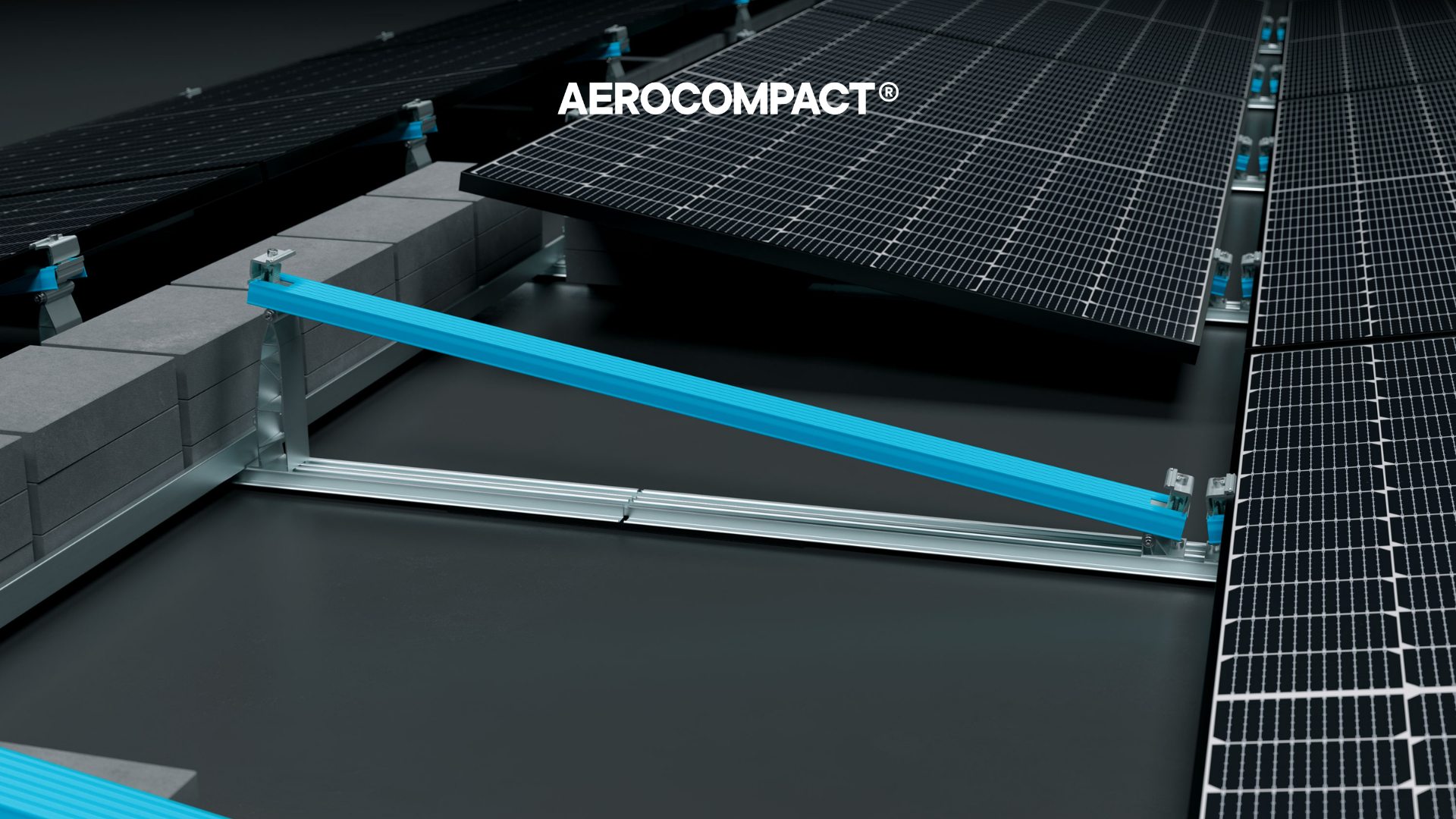
Two rails. Big impact. With the new Alpine Support Rail, AEROCOMPACT expands the range of applications forCOMPACTFLAT SN 2 and SN FAST— for heavier loads, greater flexibility, and easy installation.
When PV modules reach their load limits
PV modules are becoming increasingly thinner and lighter. As a result, the load reserves in the frame and glass laminate often decrease as well. Especially under high snow loads, the PV module itself—rather than the mounting system—can therefore become the limiting factor.
With long-side clamping without continuous support, the permissible load values of many modules are limited. Depending on the module type used, additional support may be required even at a characteristic snow load of around 1.3 kN/m² to comply with the module manufacturer’s installation specifications.
This is exactly where AEROCOMPACT comes in with a new solution: the Alpine Support Rail.
As one of the first providers on the market, AEROCOMPACT is expanding its flat-roof systems to include additional module support that accommodates higher load requirements without unnecessarily complicating the installation process.
DISCOVER THE ALPINE SUPPORT RAIL
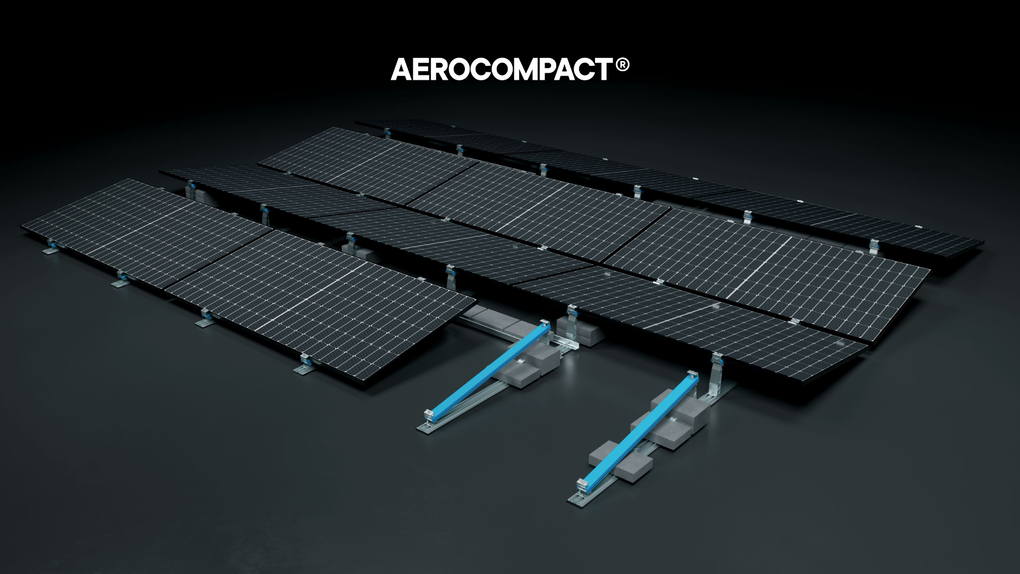
Additional support. Higher permissible snow loads.
The new Alpine Support Rail was developed specifically for the COMPACTFLAT SN 2 and COMPACTFLAT SN FAST flat-roof systems.
Two Alpine Support Rails per module provide additional support under high pressure and snow loads. They reduce deformation of the PV module and, when load requirements are met, allow for installation in accordance with the module manufacturer’s specifications.
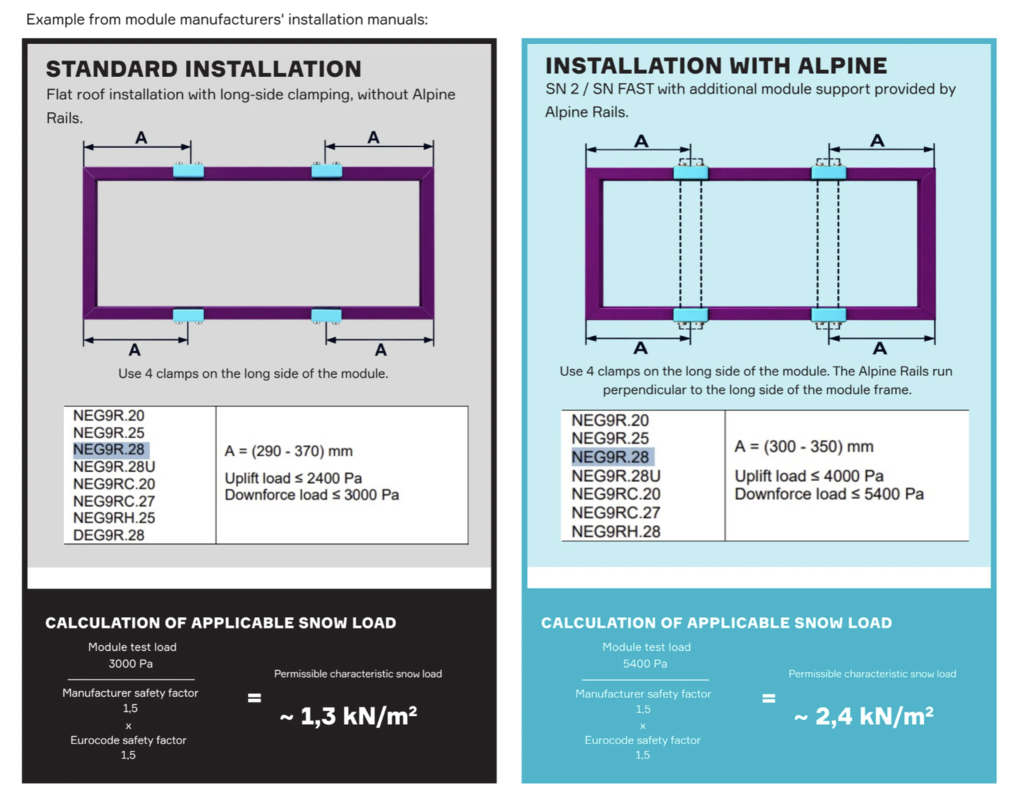
The approvals from selected module manufacturers demonstrate just how significant the difference can be:
Using the Trina Solar NEG9R.28 module as an example, the calculated characteristic snow load increases from approximately 1.3 kN/m² to 2.4 kN/m² thanks to the additional support.
This corresponds to an increase of approximately 80%—with the PV module remaining unchanged.
The key difference lies in the mounting method: The additional support allows for higher load values to be taken into account in accordance with the manufacturer’s specifications.
The actual permissible loads depend on the specific module type and the manufacturer’s installation specifications.
Simple installation. No additional fasteners.
With the Alpine Support Rail, greater stability does not automatically mean more installation effort.
Installation takes just three steps:
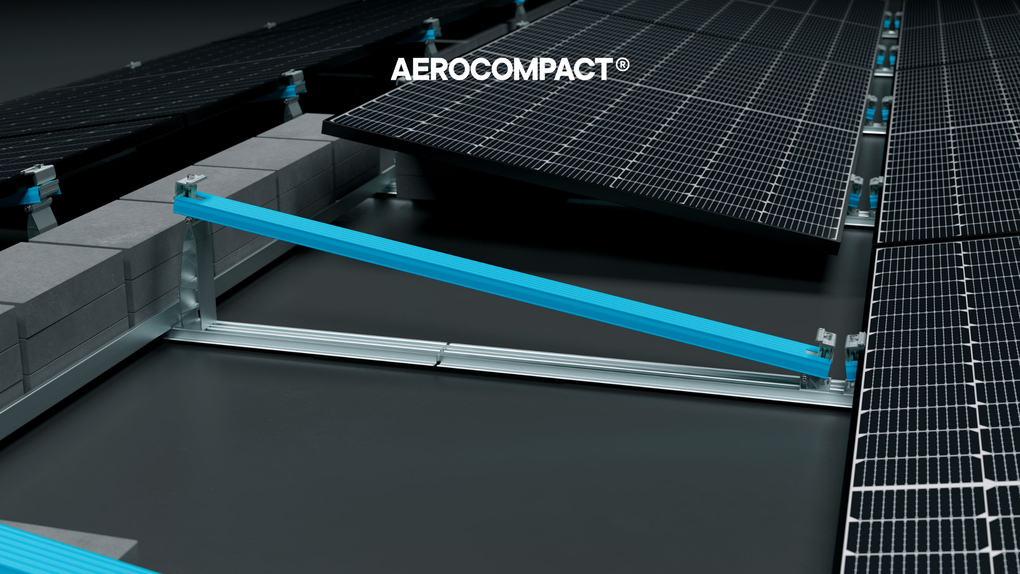
- Place the Alpine Support Rail: Position two Alpin carriers on the mounting system before installing the modules.
- Position the module: Place the PV module as usual.
- Clamp together: Secure the Alpine Support Rail and PV module using the existing module clamps.
No additional screws, clamps, or fasteners are required. There is also no need for a separate screw-fastening step.
The Alpine Support Rail is designed for PV modules with a width of 1,134 mm and can be integrated into bothCOMPACTFLAT SN 2 andCOMPACTFLAT SN FAST.
Installed correctly. Module warranty maintained.
In addition to providing extra stability, the Alpine Support Rail offers another key advantage: it allows for installation in accordance with the module manufacturer’s specifications, provided the load requirements are met.
This means that PV modules can be used even under higher snow loads within the approved installation conditions—an important prerequisite for maintaining the module warranty.
Especially in regions with heavy snowfall, this opens up additional possibilities for the planning and implementation of PV systems.
More Options for COMPACTFLAT SN 2 and SN FAST
With the new Alpine Support Rail, AEROCOMPACT expands the range of applications for its proven flat-roof systems.
The combination of targeted module support, higher permissible load values in accordance with the manufacturer’s approval, and simple installation provides greater flexibility for installers and planners—especially for projects with high snow load requirements.
Two brackets. No additional fasteners. More possibilities